
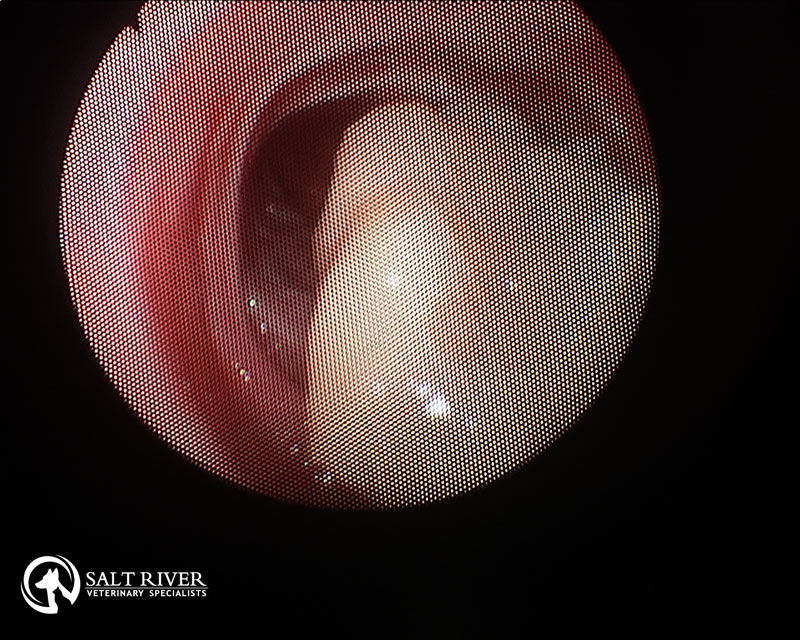
Tracheal Stenting for Dogs in Scottsdale, AZ
Dogs suffering from severe tracheal collapse that no longer responds to medication may benefit greatly from tracheal stenting. At Salt River Veterinary Specialists, our specialists place a specially designed, flexible prosthesis inside the trachea to provide internal support, stabilize the airway, and help your dog breathe more comfortably, all without an external incision.
Understanding Tracheal Collapse
Tracheal collapse is a progressive condition in which the cartilage rings supporting the windpipe weaken and flatten. It most often affects small and toy breeds and causes a characteristic honking cough, exercise intolerance, and in severe cases, life-threatening breathing distress. Most dogs are first treated with cough suppressants, anti-inflammatories, bronchodilators, weight management, and a harness instead of a collar. When these measures fail to control symptoms, stenting may be recommended.
Who Is a Candidate for a Tracheal Stent?
Not every dog with tracheal collapse is an appropriate candidate, and careful selection is essential. Our internal medicine specialists evaluate each patient using thoracic radiography, fluoroscopy, and bronchoscopy to determine the location and severity of the collapse, check the smaller airways, and rule out other causes of coughing such as heart disease or Valley Fever. Dogs with severe collapse of the airways deep within the lungs may not benefit as much from a tracheal stent.
How a Tracheal Stent Is Placed
Specialized measurements are taken to determine the exact diameter and length of stent your dog needs. Under general anesthesia, the stent is guided into position through the mouth using real-time fluoroscopy, then carefully deployed so it expands against the walls of the trachea. This video shows the stent opening inside the airway. The procedure can usually be completed in a single anesthetic episode, and once placed, the stent is permanent.
Recovery and Aftercare
Most dogs stay in the hospital for one to two nights after stent placement so our team can monitor breathing and manage coughing. Many dogs show dramatic improvement in breathing soon after the procedure. Some coughing often continues, and most dogs need ongoing medications. Regular rechecks with our team and your family veterinarian help us monitor the stent and adjust treatment over time.
Related Airway Care
Some dogs with airway disease also have problems such as laryngeal paralysis or brachycephalic airway syndrome, which our surgical team treats as described on our upper airway surgical conditions page. Pets with nasal symptoms may benefit from rhinoscopy. Stenting is one of several interventional procedures we offer, along with urinary stenting. Explore all veterinary services or review payment options.
Tracheal Stenting FAQs
Is tracheal stenting surgery?
Tracheal stenting is a minimally invasive procedure performed through the mouth under anesthesia, with no external incision.
Can a tracheal stent be removed?
No. Once placed, the stent becomes a permanent part of the airway.
Will my dog stop coughing completely after a stent?
Breathing usually improves significantly, but some coughing often continues and is managed with medication.
How long will my dog stay in the hospital?
Most dogs are hospitalized for one to two nights after the procedure.
Is every dog with tracheal collapse a candidate?
No. Candidates are carefully selected based on the location and severity of collapse and overall health.
What are the risks of tracheal stenting?
Potential complications include persistent coughing, stent fracture, inflammation, or tissue growth within the stent, which our team monitors for over time.
What breeds most often need tracheal stents?
Small and toy breeds, such as Yorkshire Terriers, Pomeranians, and Chihuahuas, are most commonly affected.
Help Your Dog Breathe Again
Call Salt River Veterinary Specialists at (480) 819-8630 or request an appointment online to find out if tracheal stenting is right for your dog.