
Veterinary Cystoscopy in Scottsdale, AZ
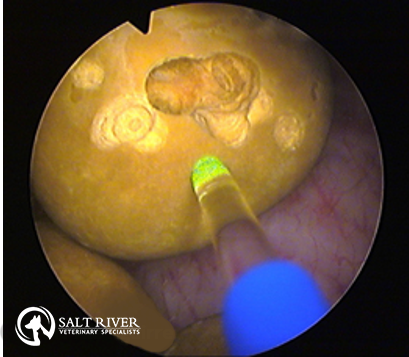
Cystoscopy is a minimally invasive examination of the inside of your pet’s urinary bladder, urethra, and prostate. At Salt River Veterinary Specialists, our specialists use an extremely small, lighted cystoscope with a camera to diagnose ectopic ureters, polyps, tumors, and stones anywhere in the lower urinary tract, and often to treat them in the same procedure, without external incisions.
When Your Pet May Need a Cystoscopy
Urinary problems can be frustrating for pets and families, especially when they keep coming back. Our internal medicine specialists may recommend cystoscopy for pets with:
- Recurrent urinary tract infections
- Blood in the urine without a clear cause
- Straining or difficulty urinating
- Urinary incontinence or leaking, particularly in young dogs who may have ectopic ureters
- Bladder or urethral stones
- Bladder or urethral masses identified on ultrasound
Diagnosis and Treatment in One Procedure
Cystoscopy does more than help us see. Specialized instruments passed through the scope allow our specialists to collect biopsies and cultures, retrieve small stones, and perform laser procedures. Treatments performed with cystoscopy at our hospital include laser bladder stone removal, laser ectopic ureter correction, and correction of vaginal webs and other congenital defects. Cystoscopy can also assist with urinary stenting.
Vaginal Web Laser Correction
A vaginal web, or vestibulovaginal band, is a thin band of tissue that can trap urine and lead to recurrent infections and irritation in female dogs. This video shows how our specialists use a cystoscope and surgical laser to precisely remove the band. Because the procedure is performed through the natural opening, there are no incisions, and most pets recover quickly with noticeable improvement in urinary health.
What to Expect
Cystoscopy requires general anesthesia, which is typically brief and carefully monitored. Most pets go home the same day. Mild urinary urgency or a small amount of blood in the urine for a day or two afterward is normal. Our specialist will discuss what was seen during the procedure right away and contact you when biopsy or culture results return.
Comprehensive Urinary Care
Cystoscopy is part of our full urinary care program, which also includes evaluation of the upper urinary tract for ureteral obstruction and surgical options described on our abdominal surgical conditions and reproductive surgical conditions pages. Explore all veterinary services or read what to expect at your visit.
Veterinary Cystoscopy FAQs
Is cystoscopy safe for my pet?
Cystoscopy is minimally invasive and generally very safe. General anesthesia is carefully monitored throughout the procedure.
Can cystoscopy be performed on male dogs?
Yes. Smaller, flexible scopes allow evaluation of the urethra and bladder in male dogs, though the approach differs from female patients.
What conditions can cystoscopy diagnose?
It can diagnose ectopic ureters, bladder and urethral stones, polyps, tumors, inflammation, and congenital defects such as vaginal webs.
Can stones be removed during cystoscopy?
Yes. Small stones can be retrieved directly, and larger stones can often be broken up with a laser.
Is blood in the urine normal after cystoscopy?
A small amount of blood or urgency for a day or two is normal and usually resolves on its own.
Will my pet go home the same day?
Most pets go home the same day after recovering from anesthesia.
Can cats have cystoscopy?
Cystoscopy can be performed in female cats, while male cats may require alternative approaches due to their small urethra.
Get Answers for Your Pet’s Urinary Problems
Call Salt River Veterinary Specialists at (480) 819-8630 or request an appointment online to discuss cystoscopy for your pet.