
Urinary Stenting for Dogs and Cats in Scottsdale, AZ
Pets suffering from complex urinary conditions, including kidney stones, narrowing of the urinary tract, and tumors, may benefit greatly from urinary stenting. At Salt River Veterinary Specialists, our specialists place specially designed, flexible stents inside the ureter or urethra to relieve obstructions, restore normal urine drainage, and protect kidney function using minimally invasive techniques.
Conditions Treated With Urinary Stenting
A blockage anywhere in the urinary tract can quickly become serious. When urine cannot drain, pressure builds in the kidneys and waste products accumulate in the blood. Urinary stents may be recommended for:
- Ureteral obstruction caused by kidney or ureteral stones, especially in cats
- Ureteral or urethral strictures caused by scar tissue
- Tumors of the bladder, urethra, or prostate that block urine flow
- Obstructions that recur despite medical management
Types of Urinary Stents
- Ureteral stents run from the kidney to the bladder, bypassing a blockage in the ureter so urine can drain normally
- Urethral stents are placed within the urethra to open a narrowed passage, most often in pets with urethral tumors or strictures
Specialized measurements are used to determine the appropriate size and length of each stent. Once in place, some stents need to be removed or exchanged later, while others are permanent. More than one episode of general anesthesia may be necessary for placement and removal.
How Stents Are Placed
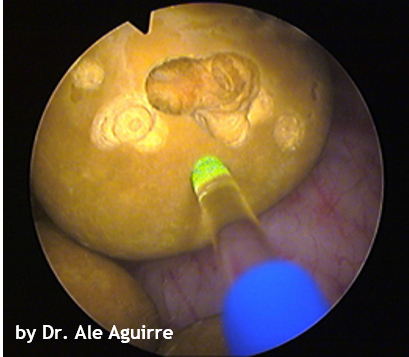
Depending on the location of the obstruction and the size of your pet, stents may be placed through the urethra using cystoscopy and real-time fluoroscopy, or with surgical assistance from our surgical team. These minimally invasive approaches avoid many of the complications associated with traditional ureteral surgery and allow many pets to recover quickly.
Careful Patient Selection
Not all patients are appropriate candidates for urinary stenting. Our internal medicine specialists evaluate each case with bloodwork, urinalysis, urine culture, radiographs, and abdominal ultrasound to locate the blockage, assess kidney function, and determine the safest treatment. Some stones lower in the urinary tract may instead be treated with laser bladder stone removal, and pets with bladder stones receive a tailored prevention plan.
Long-Term Monitoring
Pets with urinary stents need periodic rechecks, including urine testing and imaging, to monitor stent position, check for infection, and watch for new stones. We work closely with your family veterinarian on follow-up care and recommend diet and hydration strategies to support kidney health. Learn more about our tracheal stenting program, explore all veterinary services, or review payment options.
Urinary Stenting FAQs
What is a urinary stent?
A urinary stent is a small, flexible tube placed in the ureter or urethra to keep it open and allow urine to drain normally.
Is urinary stenting surgery?
Many stents are placed using minimally invasive techniques such as cystoscopy and fluoroscopy, though some cases require surgical assistance.
Will my pet’s stent be permanent?
Some stents are permanent, while others are removed or exchanged later. Your specialist will explain which applies to your pet.
How many anesthetic procedures are needed?
Some pets need only one, while others need more than one for placement and later removal.
Is my pet a candidate for a urinary stent?
Candidacy depends on the location and cause of the obstruction, kidney function, and overall health, so a thorough evaluation is required.
What follow-up care is needed?
Periodic urine testing and imaging are needed to monitor stent function and check for infection or new stones.
Do cats get urinary stents?
Yes. Cats are among the most common candidates for ureteral stents due to small kidney stones that block the ureter.
Restore Healthy Urine Flow for Your Pet
Call Salt River Veterinary Specialists at (480) 819-8630 or request an appointment online to discuss urinary stenting.