
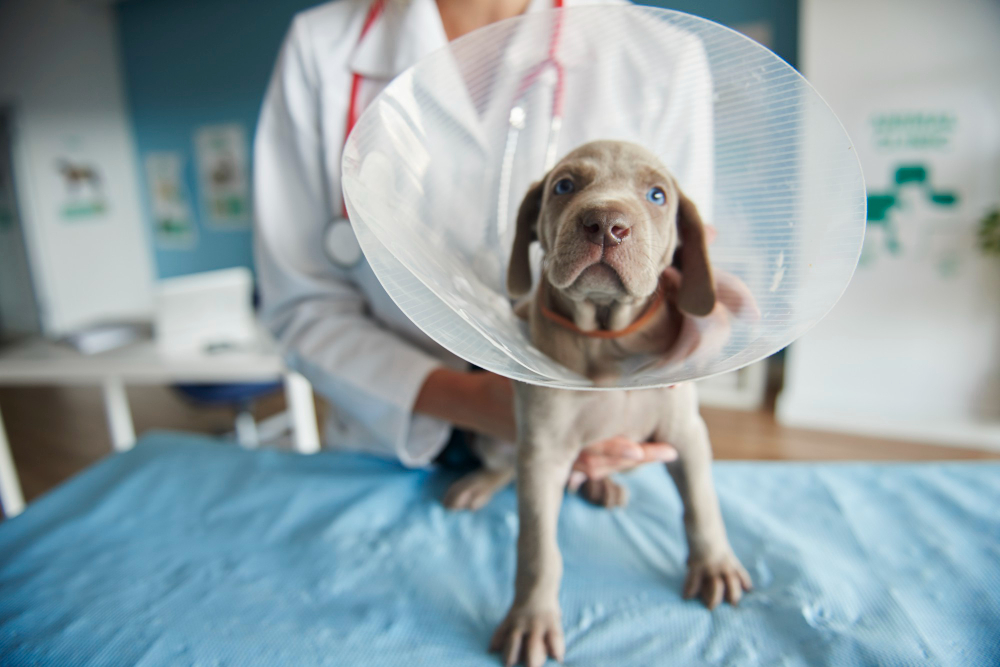
Head and Neck Surgery for Dogs and Cats in Scottsdale, AZ
The head and neck contain delicate structures, including the ears, jaws, salivary glands, and thyroid and parathyroid glands, that require precise surgical skill. At Salt River Veterinary Specialists, our board-certified surgeons treat chronic ear disease, glandular tumors, salivary mucoceles, and jaw tumors, helping pets regain comfort and quality of life.
Ear Disease Surgery
Chronic, end-stage ear infections can cause constant pain, odor, head shaking, and hearing loss despite medical treatment. When the ear canal becomes permanently narrowed or calcified, surgery may be the best option:
- Total ear canal ablation (TECA) and bulla osteotomy – Removes the diseased ear canal and cleans out the middle ear to eliminate chronic infection and pain.
- Lateral ear resection – Opens the vertical part of the ear canal to improve drainage and airflow in select patients.
Thyroid and Parathyroid Surgery
- Thyroid tumors and thyroidectomy – Removal of thyroid masses, which in dogs are often found as a lump in the neck.
- Parathyroid tumors and parathyroidectomy – Removal of a parathyroid adenoma that causes high blood calcium, which can lead to bladder stones, increased thirst, and kidney damage.
Our internal medicine team often helps diagnose these conditions with bloodwork and neck ultrasound before surgery.
Salivary Gland Surgery
A salivary mucocele is a collection of saliva that leaks from a damaged gland or duct, forming a soft swelling under the jaw, in the mouth, or in the neck. Treatment typically involves removing the affected glands (sialadenectomy), which is usually curative.
Jaw Tumors
Oral tumors can affect the upper or lower jaw. Surgery to remove part of the jaw, called mandibulectomy or maxillectomy, can remove the tumor with appropriate margins. Most pets adapt remarkably well, eating and grooming normally after recovery. Staging with chest radiographs and other imaging helps guide treatment. Learn more on our cancer surgery page.
Related Care
Pets with noisy breathing or throat masses may also be evaluated for upper airway surgical conditions, while chronic nasal discharge may call for rhinoscopy. Swallowing problems can be evaluated with swallowing studies. Explore our surgery department and all conditions we treat.
Head and Neck Surgery FAQs
What is a total ear canal ablation?
It is a surgery that removes the diseased ear canal to eliminate chronic, painful ear infections that no longer respond to medical treatment.
Will my dog be able to hear after a TECA?
Hearing is reduced in the treated ear, but many dogs with end-stage ear disease already have significant hearing loss and feel much better afterward.
What causes a salivary mucocele?
It develops when saliva leaks from a damaged salivary gland or duct and collects under the skin.
Can pets eat normally after jaw surgery?
Yes. Most pets adapt very well and return to eating and grooming normally after recovery.
What are signs of a parathyroid tumor?
Signs may include increased thirst and urination, lethargy, and urinary stones, often discovered through high calcium on bloodwork.
Are thyroid tumors in dogs cancerous?
Many thyroid tumors in dogs are malignant, so prompt evaluation and staging are important.
How long is recovery after head and neck surgery?
Recovery varies by procedure, but most pets need about two weeks of restricted activity while incisions heal.
Expert Head and Neck Surgery
Call Salt River Veterinary Specialists at (480) 819-8630 or request an appointment online to schedule a surgical consultation.