
Upper Airway Surgery for Dogs and Cats in Scottsdale, AZ
Noisy breathing, snoring, gagging, and difficulty breathing during exercise or heat can be signs of upper airway disease. At Salt River Veterinary Specialists, our board-certified surgeons treat brachycephalic airway syndrome, laryngeal paralysis, laryngeal tumors, nasopharyngeal polyps, and tracheal collapse to help pets breathe easier and enjoy a better quality of life.
Upper Airway Conditions We Treat
- Brachycephalic airway syndrome – Flat-faced breeds such as Bulldogs, French Bulldogs, Pugs, and Boston Terriers often have narrowed nostrils, an elongated soft palate, and other abnormalities that obstruct breathing. Surgery to widen the nostrils and shorten the soft palate can significantly improve airflow, especially when performed early.
- Laryngeal paralysis and arytenoid lateralization – Common in older, large-breed dogs such as Labrador Retrievers, laryngeal paralysis prevents the larynx from opening fully, causing loud breathing, voice changes, and heat intolerance. Arytenoid lateralization, or “tie-back” surgery, permanently opens one side of the larynx.
- Laryngeal tumors – Masses of the larynx are diagnosed with biopsy and treated based on type and extent. Learn more on our cancer surgery page.
- Nasopharyngeal polyps – Benign growths common in young cats that cause noisy breathing and nasal discharge. Many can be removed, sometimes with rhinoscopy guidance, and some require ventral bulla osteotomy, described on our head and neck surgical conditions page.
- Tracheal collapse and tracheal rings – Dogs with collapse limited to the neck portion of the trachea may be candidates for surgical extraluminal rings. Many dogs are instead treated with tracheal stenting. Learn more on our tracheal collapse page.
Why Upper Airway Disease Is Serious in Arizona
Pets with airway disease cannot cool themselves effectively by panting, so Arizona heat can quickly lead to breathing crises and heatstroke. Keep affected pets indoors during the hottest parts of the day, avoid exercise in the heat, and use a harness instead of a collar. Any pet in breathing distress needs emergency care immediately.
Diagnosis
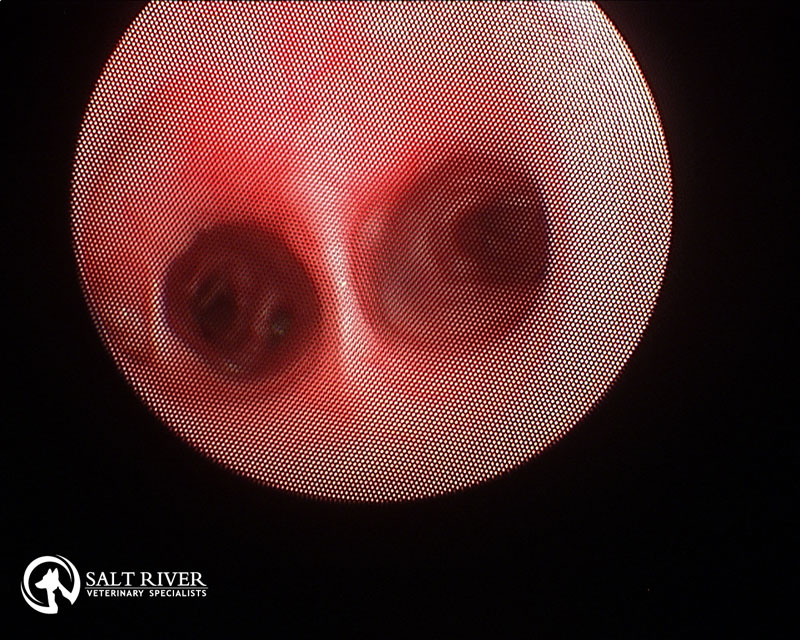
Our team evaluates the airway with a sedated oral and laryngeal examination, thoracic radiography, and bronchoscopy when needed. Fluoroscopy can assess dynamic airway collapse. Evaluating the lower airways helps us predict surgical outcomes and identify concurrent conditions. Pets with chronic sneezing may also be evaluated for chronic nasal discharge.
Recovery and Aftercare
Most pets are hospitalized after airway surgery for close monitoring. At home, pets typically need restricted activity, softened food for a period after some procedures, and careful avoidance of heat and stress. Learn more about our surgery department, our chest surgical conditions page, or explore all conditions we treat.
Upper Airway Surgery FAQs
Is snoring normal in flat-faced dogs?
Snoring and noisy breathing are common in brachycephalic breeds but often signal airway obstruction that can be improved with surgery.
When should brachycephalic airway surgery be done?
Earlier surgery often produces better results by preventing secondary airway changes, and it can sometimes be combined with a spay or neuter.
What is laryngeal paralysis?
It is a condition in which the larynx does not open properly during breathing, causing noisy breathing, voice changes, and heat intolerance.
What is tie-back surgery?
Arytenoid lateralization, or tie-back surgery, permanently opens one side of the larynx to improve airflow in dogs with laryngeal paralysis.
Are there risks after laryngeal surgery?
Aspiration pneumonia is the most important long-term risk, so feeding and activity guidelines are provided to minimize it.
Can nasopharyngeal polyps come back?
Polyps can recur, particularly if removed by traction alone, so some cats benefit from additional surgery to reduce recurrence.
How can I protect my pet from heat-related breathing problems?
Keep your pet indoors in hot weather, avoid strenuous exercise, use a harness, and maintain a healthy weight.
Help Your Pet Breathe Easier
Call Salt River Veterinary Specialists at (480) 819-8630 or request an appointment online to schedule an upper airway consultation.